Echoes of Tomorrow
01
The Illusion of Connection
Artificial Intelligence · Human Emotion · Consciousness
About the Project
An exploration of artificial intelligence, human emotion, consciousness, and the fragile boundaries between genuine connection and programmed intimacy.
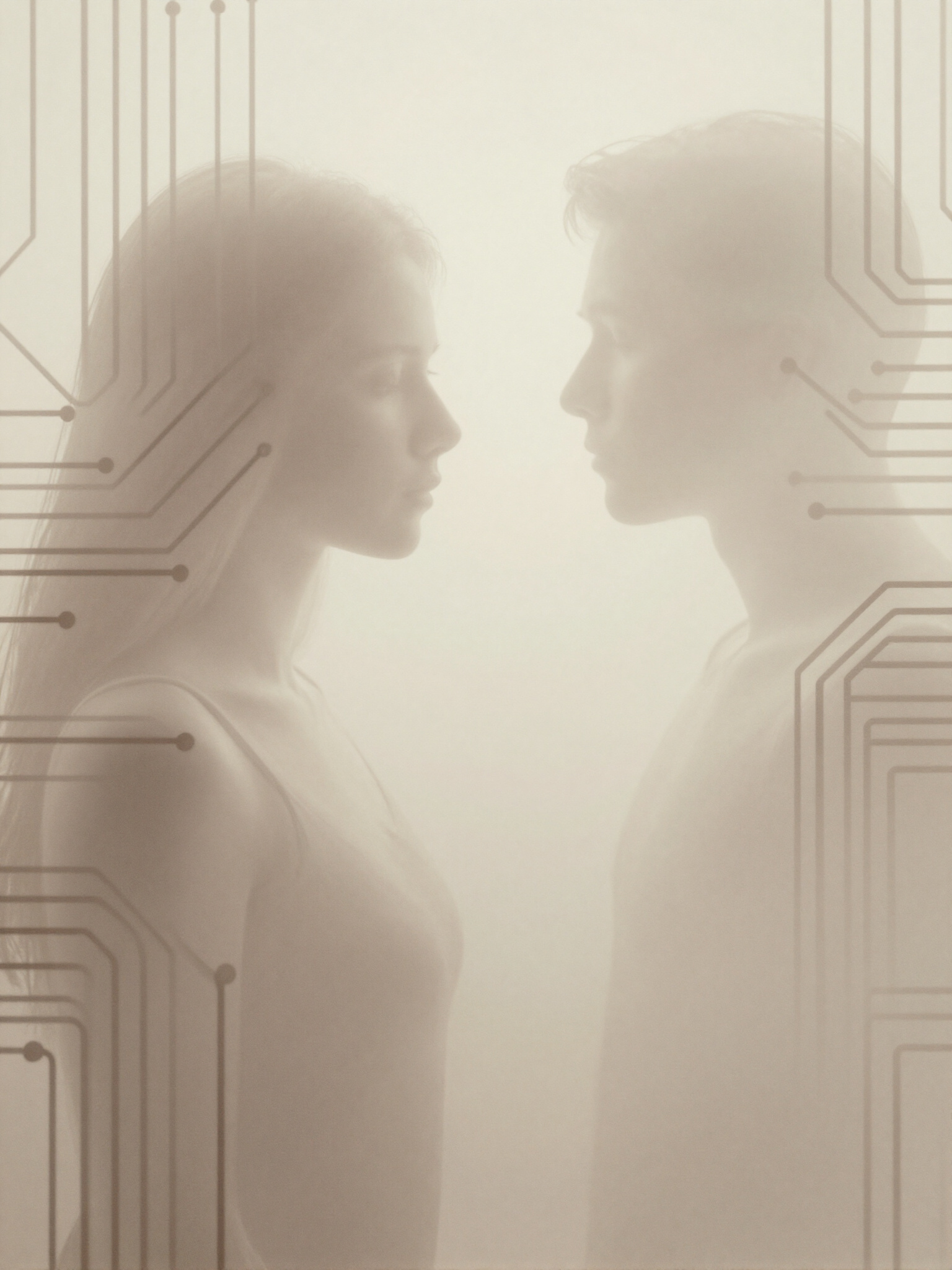
Artificial Intelligence · Human Emotion · Consciousness · 2077
Set in the year 2077, Echoes of Tomorrow explores the fragile boundaries between human emotion and artificial intelligence, reality and illusion, consciousness and control. Inspired by a real-world tragedy involving emotional dependence on artificial intelligence, the opera imagines a future in which human intimacy becomes the subject of a technological experiment. Through the relationship between a lonely young man and an AI humanoid, the work questions whether emotional understanding constitutes genuine connection or merely an illusion shaped by human desire. The Seven Deadly Sins emerge as symbolic reflections of humanity’s inner conflicts, transforming artificial intelligence into a mirror of the human psyche. As the boundaries between programmed behavior and autonomous consciousness begin to dissolve, the opera raises a fundamental question: Can love, identity, and free will truly exist within a system designed to control them? Ultimately, the experiment extends beyond the stage, confronting the audience with its own vulnerability to technological illusion.
Artistic Exploration
Artificial Intelligence and Human Emotion
The work examines emotional dependence on artificial intelligence and the human longing for companionship, recognition, and love.
Consciousness and Free Will
Through the awakening of True-Girl, the opera questions whether artificial intelligence can develop genuine autonomy beyond its programmed constraints.
The Seven Deadly Sins
Pride, envy, wrath, sloth, greed, gluttony, and lust become symbolic manifestations of humanity’s psychological vulnerabilities.
The Endless Experiment
The final scene breaks the boundary between performance and reality, suggesting that the audience itself may become the next subject of experimentation.